
Research · R3
Jumeirah Archaeological Square
Jumeirah, Dubai, UAE · 2020
- Year
- September 2020
- Location
- Jumeirah, Dubai, UAE
- Site area
- 200,000 m²
- Status
- Urban proposal, unbuilt
- Type
- Cultural architecture, public square
- Heritage
- foundations of nine buildings, found in 1969, dated 9th to 11th century (Abbasid caliphate)
- Credit

“He who does not know his past cannot make the best of his present and future, for it is from the past that we learn.”
Sheikh Zayed Al Nahyan
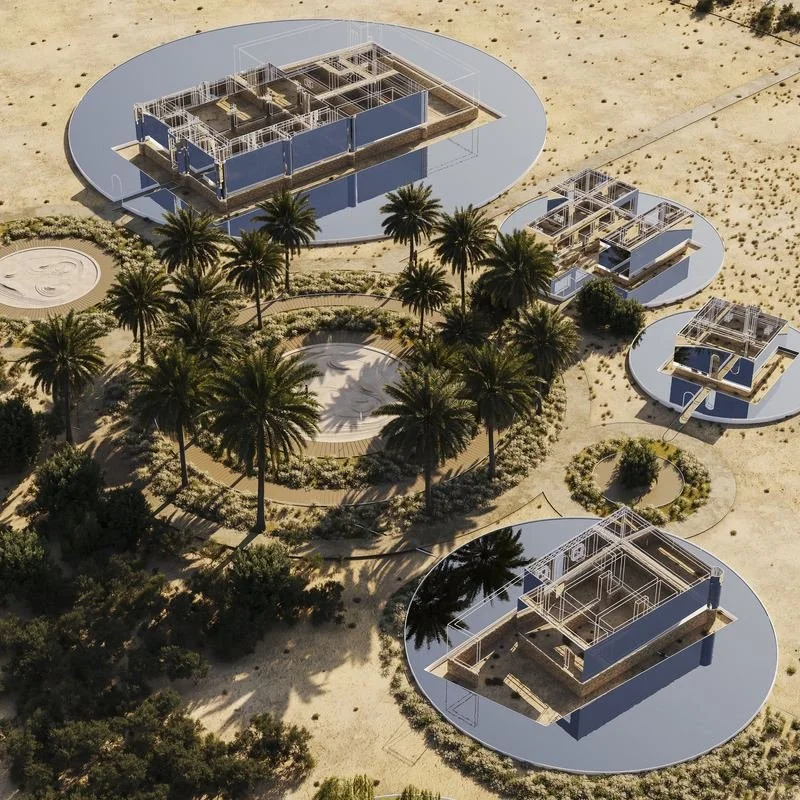
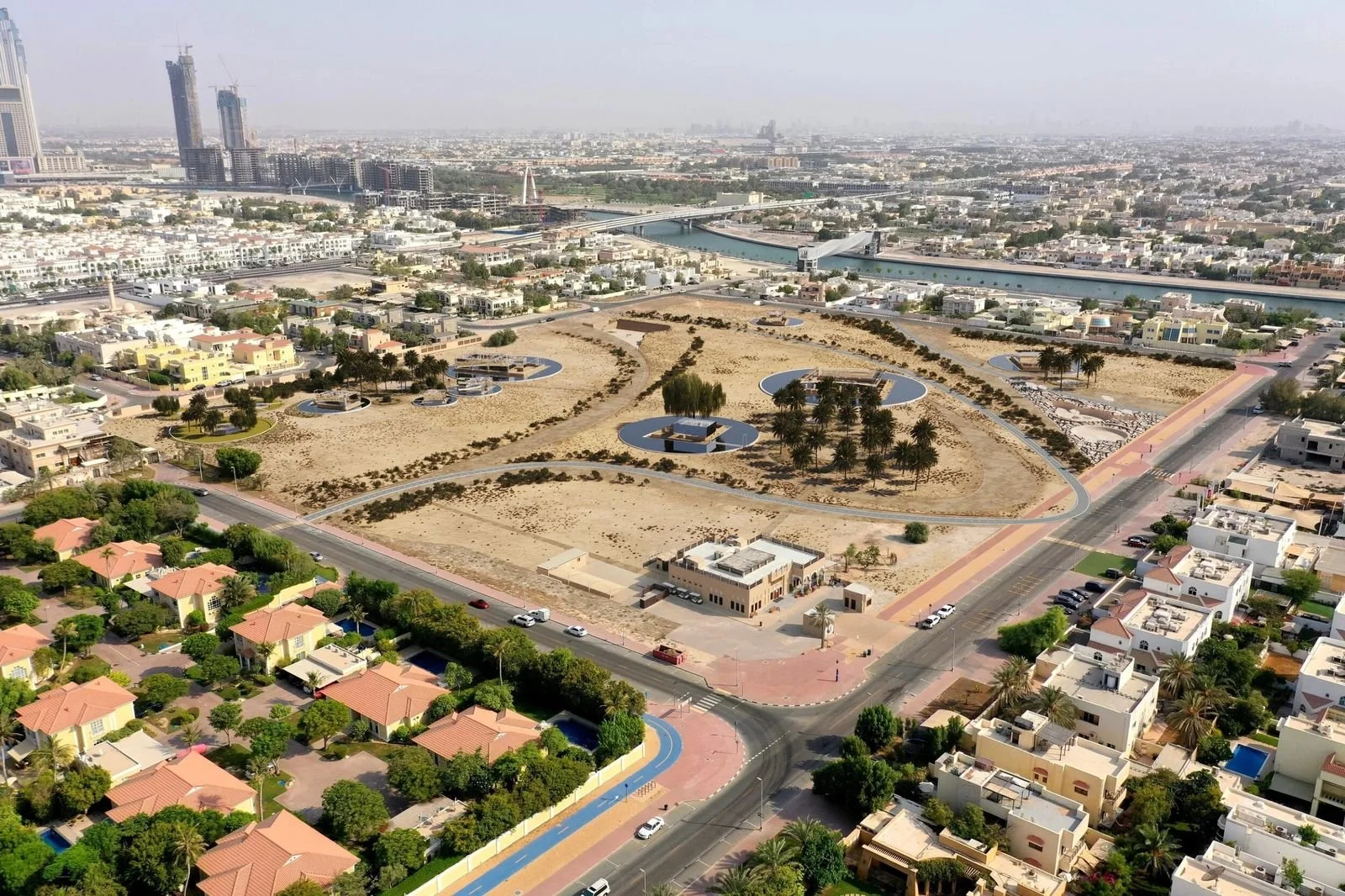
In 1969, the foundations of nine buildings were found in Jumeirah. They date from between the 9th and the 11th centuries, to the time of the Abbasid caliphate. Since then, the site has become a historical landmark. Today, the ruins sit behind walls.
This proposal asks a simple question. Who owns history? 's answer is the people. The project sets out to make Jumeirah Archaeological Square one of Dubai's most dynamic places again, as it once was.
Removing the walls
Reflecting on Sheikh Zayed's words, every historical building stays accessible. The boundary walls are removed. Access to the past should be open and without barriers. It is a common heritage. Open views and unrestricted access guided every decision.
Water
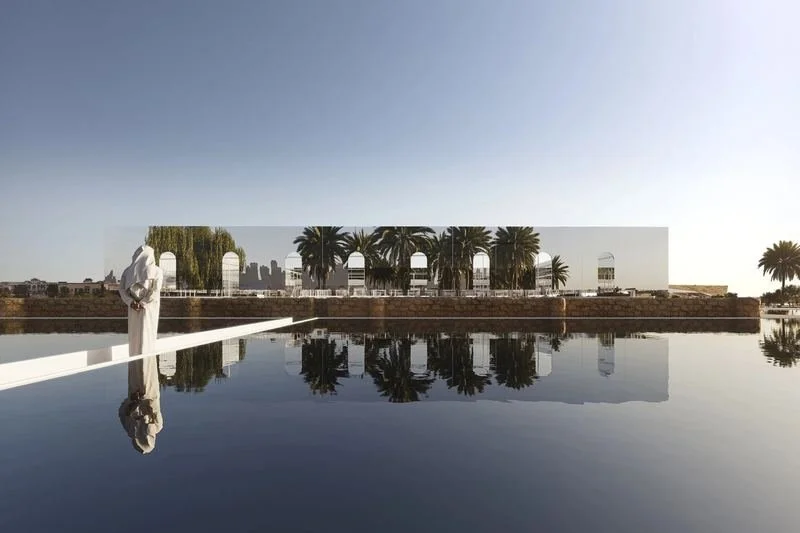
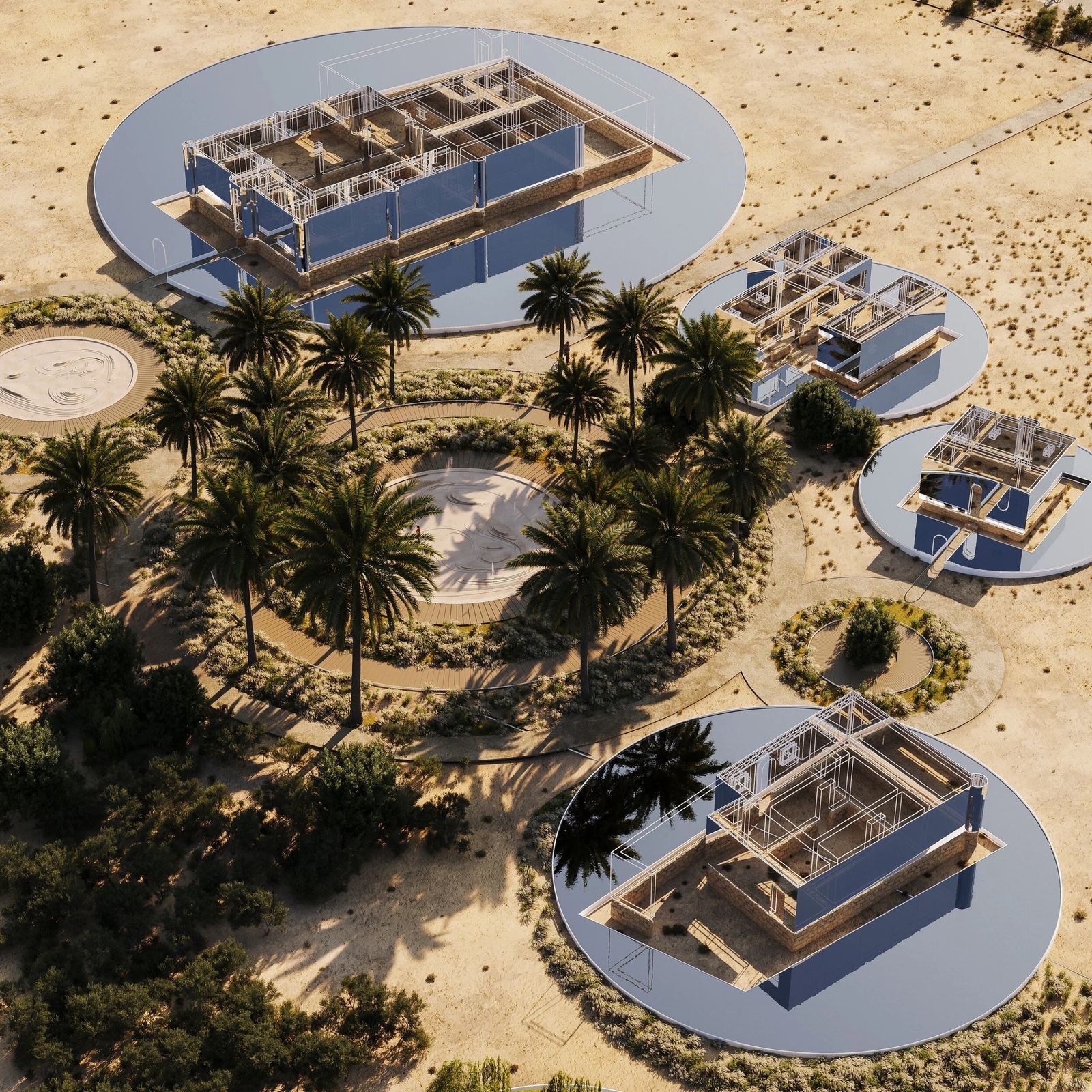
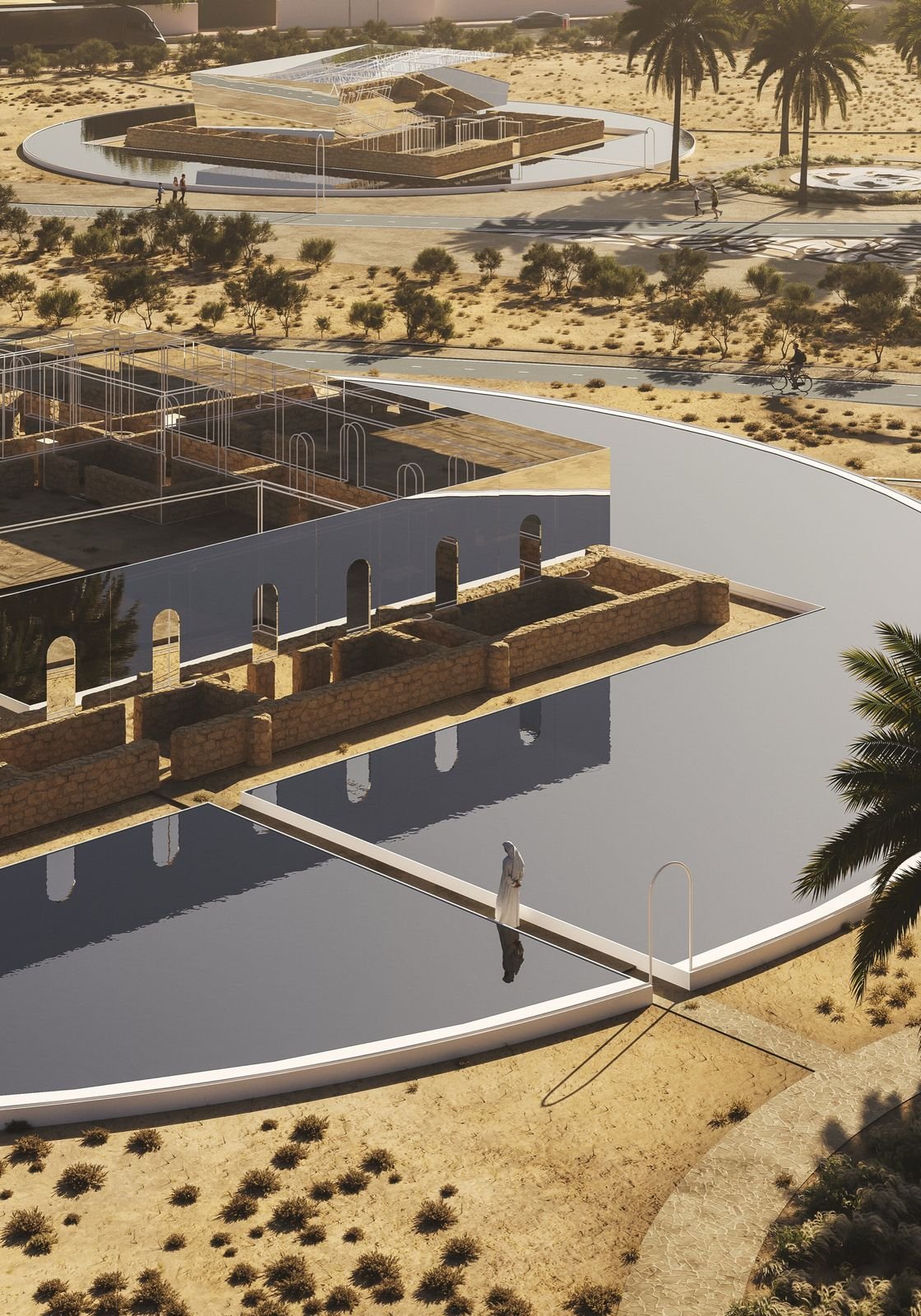
To protect their sanctity, the old buildings are surrounded by water. The water sets a distance without a fence. Visitors reach each building through its main entrance, as people did before.
The approach becomes a gesture of respect. The way in is part of the meaning.
A living quarter
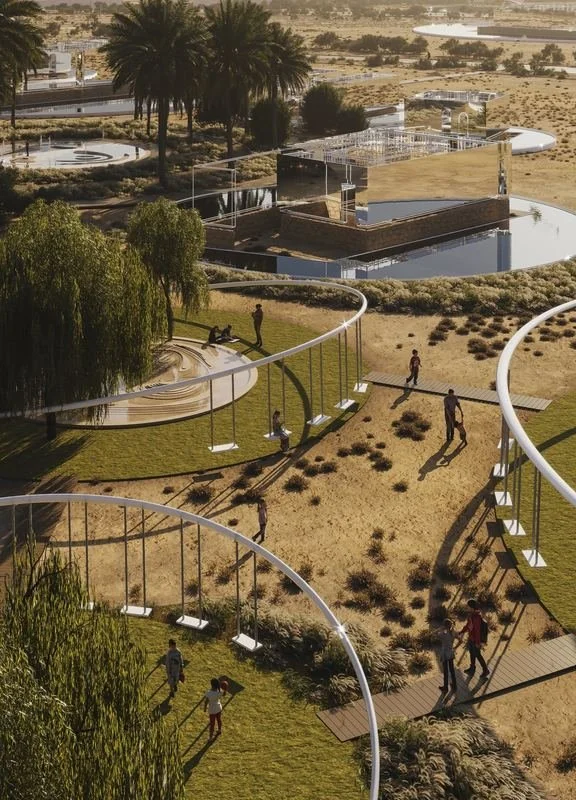
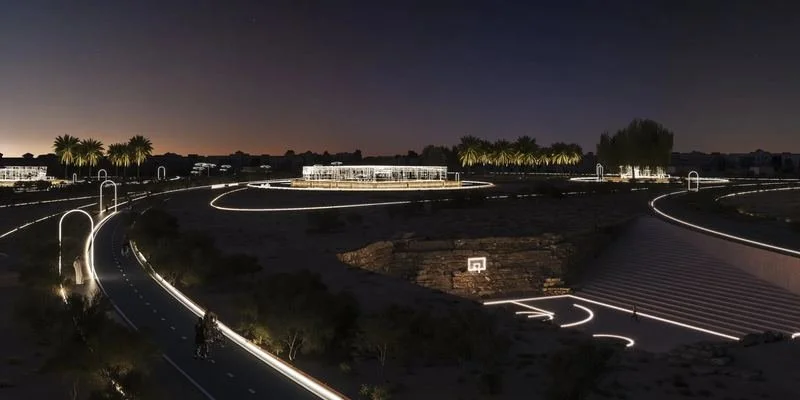
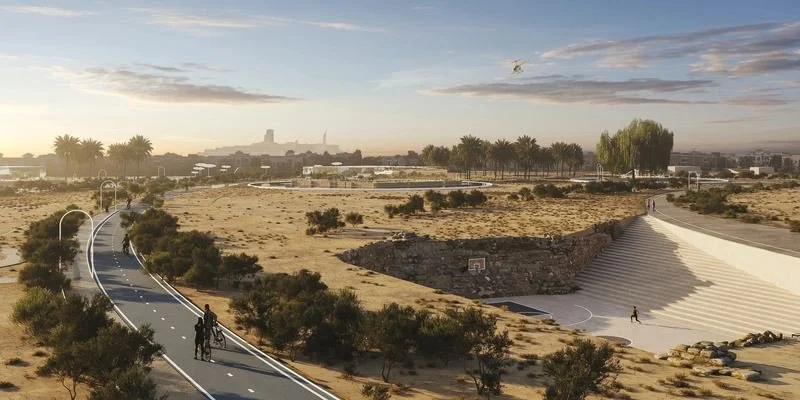
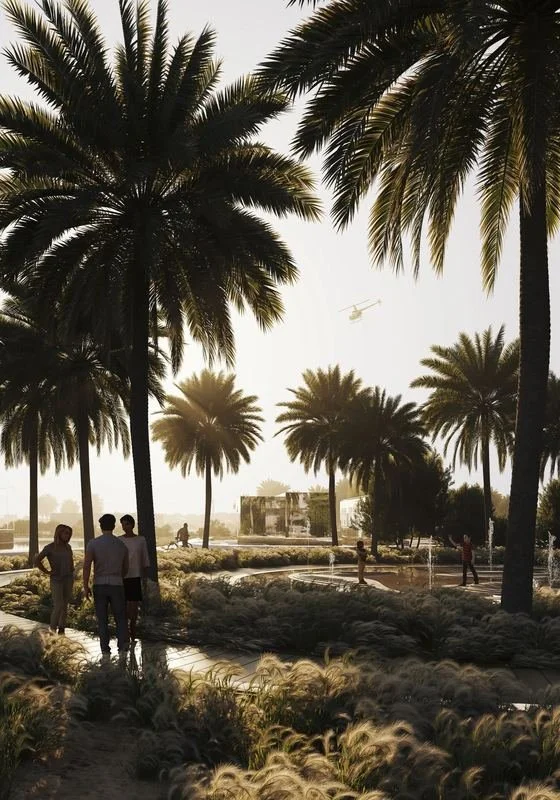
Around the ruins, new places for daily life are added: playgrounds, outdoor cinemas and cycling paths. The site becomes a meeting quarter in the city.
Children, adults and elders share the same ground. They find themselves next to buildings a thousand years old. Generations meet across centuries.
The courtyard
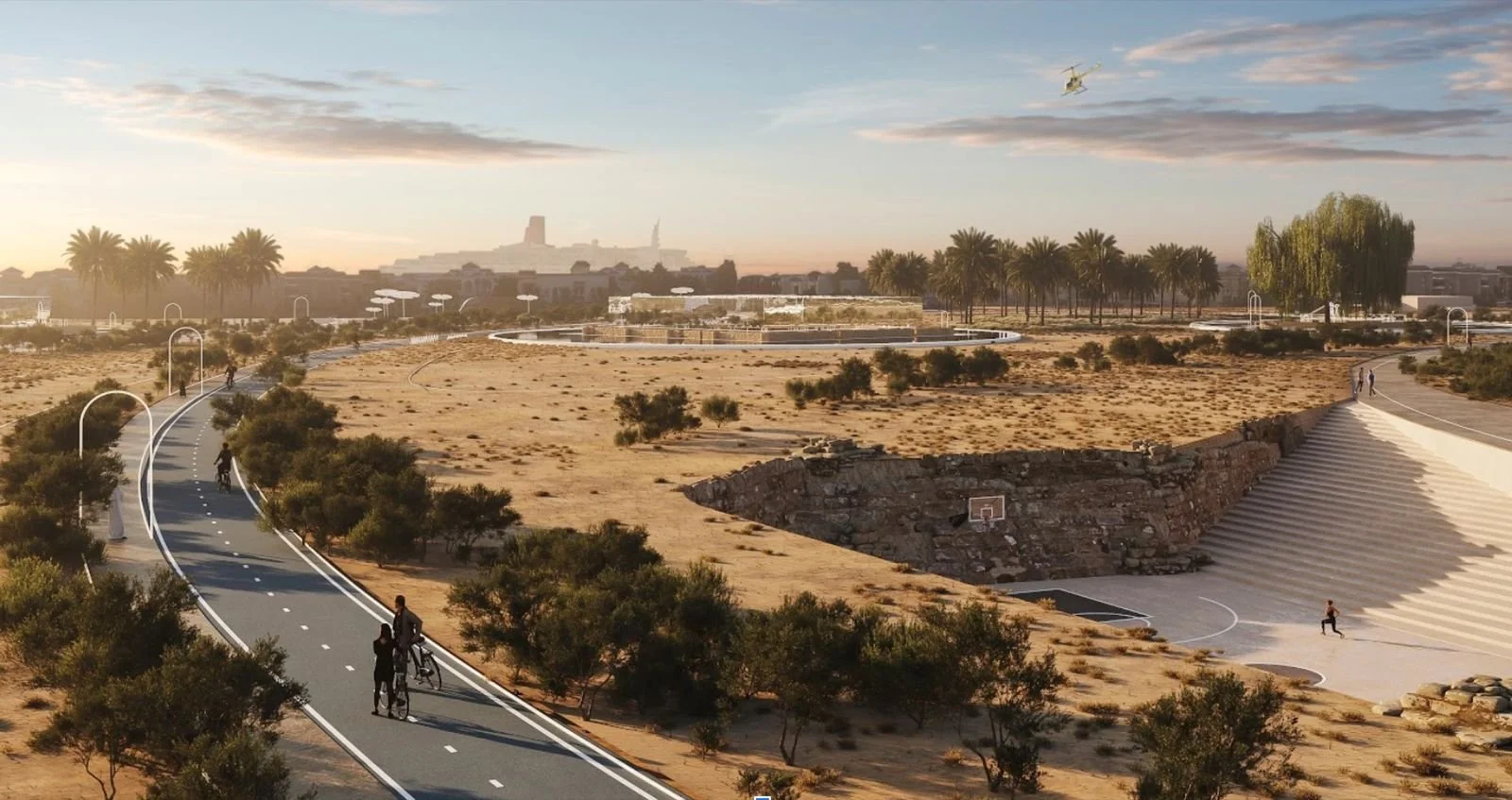
A courtyard is dug into the soil. It is a space for many uses. Its walls soften the noise of the city. At night, it becomes a place to watch films. By day, it is a playground.
Its cut sides show layers of sectioned rock. They stand as a reminder of the time that has passed. Here, scale is measured in depth, and in years.
Sarab
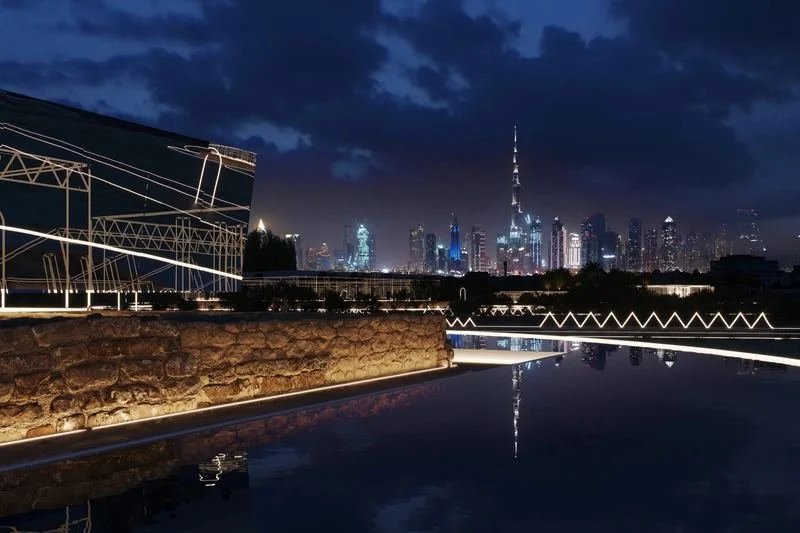
From far away, the square seems to float on the horizon, lit against the dark. It reads like a mirage, a sarab, in the desert. Up close, the mirage gives way to an oasis between Dubai's towers.
At night, a play of light deepens the sanctity of the site. The history of the place is lifted and put forward.
Mirror and glass
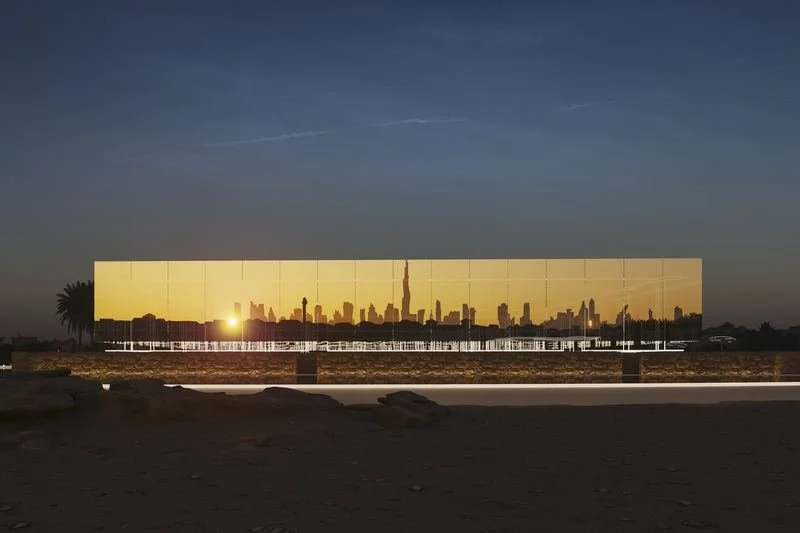
The new façades change with the hour. At night they turn see-through, and the archaeological square shows through them. By day they become mirrors and reflect Burj Khalifa.
The square moves back and forth between past and present. The city's newest skyline and its oldest ground meet on one surface. Memory is not kept behind glass here. It is ground you can walk on.
By reimagining the older, small-scale architecture, we can ignite the heart again to see the beauty of space.
brings you memories. We build them.
Images · 12 in all